Quick Answer
This article explains AI copyright rules for independent artists by focusing on reducing takedown risk by documenting rights and avoiding copied or unclear AI outputs. The practical takeaway is to verify current platform or rights rules, keep clean metadata and documentation, and make decisions based on your catalog goals rather than hype, shortcuts, or unsupported claims.
Key Takeaways
- 2026 New Copyright Rules: The Death of AI Tracks? is mainly about reducing takedown risk by documenting rights and avoiding copied or unclear AI outputs.
- Artists should keep accurate metadata, release records, and rights documentation.
- Platform, marketplace, and royalty policies can change, so current rules should be verified.
- The safest plan is to protect catalog control while building sustainable audience growth.
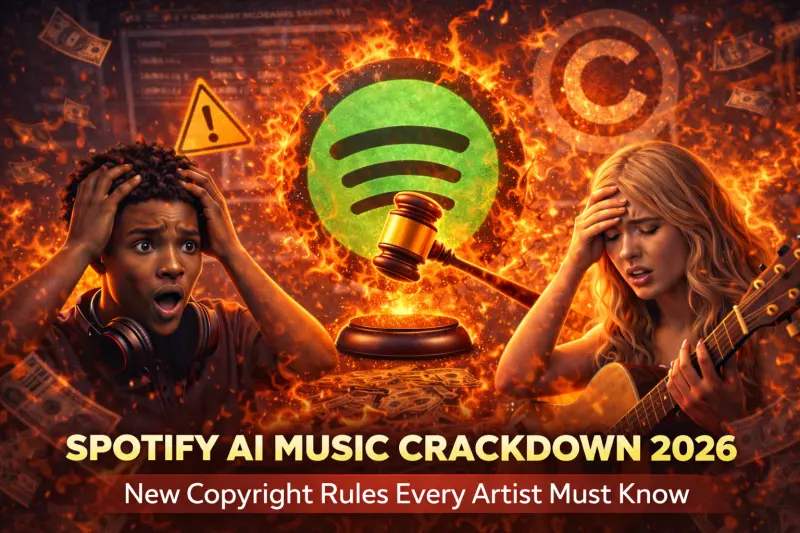
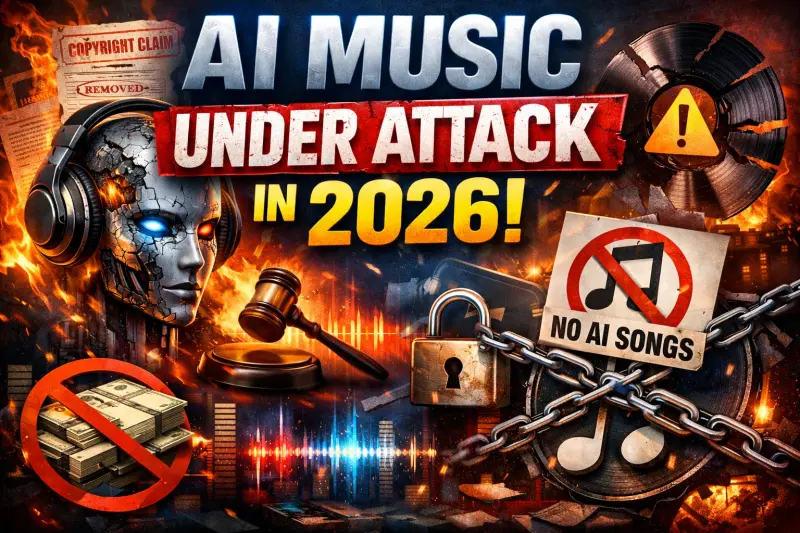
AI Music Is Under Attack in 2026: What’s Really Happening?
Millions of AI-generated songs may disappear from streaming platforms sooner than expected.
In 2026, music copyright laws are changing faster than artists can react. The wild-west era of typing a simple prompt and distributing the output to global storefronts is officially ending as legal precedents and platform rules solidify.
AI-generated music exploded in the last two years. Anyone could type a prompt and create a song in seconds.
But in 2026, the music industry is officially pushing back with coordinated legal actions, technological barriers, and sweeping legislative changes.
Major platforms, labels, and copyright authorities are now tightening rules around AI-generated tracks, and the consequences could be massive for casual creators and serious artists alike.
Why Are AI Songs Suddenly a Problem?
The biggest issue is copyright ownership.
Most AI tools are trained on copyrighted music without direct permission from original artists. This has triggered legal pressure from record labels and publishers worldwide. The RIAA, representing major labels like Sony Music, Universal Music Group, and Warner Music Group, has launched multi-billion dollar lawsuits against prominent generative AI firms. These lawsuits claim that the models' training datasets are built on massive, unauthorized copies of commercial recordings, constituting systemic copyright infringement.
As a result:
-
Platforms are forced to verify ownership of all incoming audio
-
AI tracks without verifiable proof of commercial licensing may get removed
-
Monetization could be blocked instantly by automated detection filters
What’s Changing in 2026?
Here’s what artists and creators need to understand about the regulatory landscape in 2026:
-
Stricter copyright checks: Distributors are introducing mandatory questionnaire checks during submission, requiring creators to detail their production process and specify if AI generated any musical tracks.
-
Exclusivity Verification: Streaming services are requiring verification that the submitted song is an exclusive composition. Since many public generative tools can output similar patterns from similar prompts, proving exclusivity is nearly impossible for unedited AI audio.
-
Watermarking Standards: Platforms have begun adopting digital audio watermarking (such as C2PA standards). This technology embeds imperceptible metadata tags directly into the audio waveform at creation. If an audio file is uploaded to a streaming service with an AI watermark indicating it was generated by a platform without commercial clearance, the file is automatically rejected.
-
Label Scans: Record labels are actively scanning public catalogs using machine learning models to identify unauthorized voice models, cover versions, or trademarked melodic hooks.
This isn’t speculation anymore — enforcement has already started.
Can You Still Upload AI Music?
Yes, but with conditions.
AI music is only considered “safe” if:
-
You own exclusive rights to the model or dataset. This applies to enterprise artists who build custom models trained solely on their own catalog of cleared material.
-
You can legally prove original composition. Having project files (DAW projects like Ableton, Logic, or FL Studio) showing midi edits, human-played parts, and arrangement revisions acts as primary proof of authorship.
-
The AI is used as a tool, not the creator. For example, using AI for sound design, vocal pitch correction, or noise reduction is safe. Letting AI write the lyrics, composition, and vocal melody is not.
If your track is 100% AI-generated, the risk is extremely high.
The Shift in Global Copyright Registrations
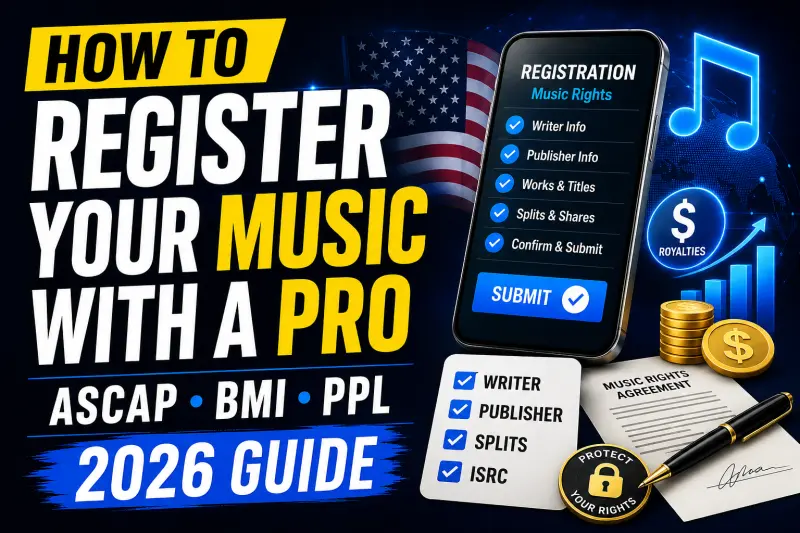
It is not just the streaming platforms clamping down. Global copyright offices, including the US Copyright Office and EU intellectual property regulators, have issued strict guidelines regarding generative works. Under 2026 guidelines, works generated entirely by a machine are denied copyright protection because they lack "human authorship." If an independent artist cannot copyright their work, they cannot legally protect it from theft, nor can they claim mechanical royalties from collection societies (like ASCAP, BMI, or PRS). This creates a massive liability for any creator looking to build a long-term business or secure synchronization placements in movies, games, or commercials.
⚖️ The Evolving Global Legal Landscape
Legal challenges are not confined to the United States. In the European Union, the AI Act of 2026 has introduced strict transparency obligations for general-purpose AI models, requiring developers to publish detailed summaries of the copyrighted content used to train their algorithms. This makes it easier for music publishers to identify infringement and demand the removal of unauthorized training data. Similar copyright reforms are being debated in the UK, Japan, and Australia, suggesting a global consensus is forming. For independent creators, this means the risk of relying on generative assets is global; a track that is legally safe in one territory could face immediate distribution blocks in another due to localized injunctions against AI companies.
What Should Independent Artists Do Now?
If you’re serious about building a long-term music career in 2026:
✅ Focus on human-created music: Build your brand around authentic human performance. Human emotion and storytelling cannot be duplicated by prompt engines.
✅ Use AI only for assistance: Implement AI for mixing, mastering references, or brainstorming, but write the core song elements yourself.
✅ Keep proof of ownership and production process: Always save your project stems, MIDI arrangements, and licensing certificates from paid AI tool tiers. If your distributor flags a release, this documentation is your only defense.
✅ Avoid mass-uploading AI songs for quick money: The era of building passive income from bulk upload accounts is over. Focus on deep fanbase engagement instead.
Shortcuts are disappearing fast.
Final Thoughts
AI helped many creators get started, but copyright law always catches up. 2026 is the year where real artists win and shortcut creators lose. The consolidation of copyright standards means platforms are shifting resources back to supporting genuine human artists who can sustain active communities.
If you want your music to stay online, monetize safely, and grow globally — originality is no longer optional.
Release Your Music Globally With Last Play Distro
With Last Play Distro, artists can distribute music globally to 150+ platforms, start on a Free tier where they keep 60% royalties, or upgrade to Premium tiers where they can keep up to 95% royalties.
- Global music distribution for independent artists
- Transparent royalties with plan-based royalty splits
- No fake partner, review, rating, or inflated artist-count claims