Quick Answer
This article explains Google Discover AI content for independent artists by focusing on improving originality, expertise, and transparency for Discover eligibility. The practical takeaway is to verify current platform or rights rules, keep clean metadata and documentation, and make decisions based on your catalog goals rather than hype, shortcuts, or unsupported claims.
Key Takeaways
- Google Removing AI-Generated Content From Discover in 2026 is mainly about improving originality, expertise, and transparency for Discover eligibility.
- Artists should keep accurate metadata, release records, and rights documentation.
- Platform, marketplace, and royalty policies can change, so current rules should be verified.
- The safest plan is to protect catalog control while building sustainable audience growth.
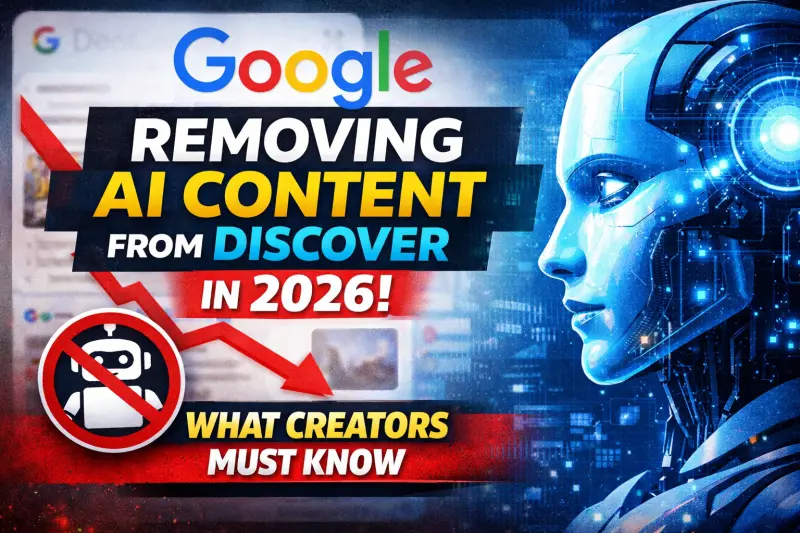
Google Is Removing AI-Generated Content From Discover in 2026 — What Creators Must Know
Google Discover has become one of the biggest traffic sources for blogs, news websites, and creators. But in 2026, Google has quietly started restricting and filtering AI-generated content from Discover — and many websites are already seeing sudden drops in impressions.
If your blog traffic depends on Discover, this update can seriously impact you.
Here’s what’s happening, why Google is doing this, and how creators can stay safe.
🚫 Why Google Is Reducing AI Content in Discover
Google Discover is not a traditional search engine. It’s a recommendation system, and Google wants Discover to show:
-
Original insights
-
First-hand experience
-
Human-written analysis
-
Trustworthy sources
In 2026, Google has tightened its systems to detect:
-
Mass-generated AI articles
-
Rewritten content with no unique value
-
Low-effort AI summaries
-
Sites publishing AI content at scale
Even if AI content follows SEO rules, Discover may silently stop recommending it.
⚠️ How This Affects Blogs & Websites
Many creators are reporting:
-
Discover impressions suddenly dropping to zero
-
No manual action or warning in Google Search Console
-
Pages still indexed, but no Discover visibility
This happens because Discover works on quality signals, not penalties.
Your site isn’t banned — it’s just not recommended anymore.
🤖 Is All AI Content Bad According to Google?
No.
Google does not ban AI content completely. But it clearly prefers:
-
AI used as an assistant, not the author
-
Human editing, opinions, and explanations
-
Real examples and experience
-
Clear originality
Pure AI-written articles with no human input are the biggest risk.
✅ How to Make Your Blog Discover-Safe in 2026
If you use AI tools, follow these rules:
1️⃣ Add Human Insight
Explain why something matters, not just what happened.
2️⃣ Avoid Mass Publishing
Publishing 10–20 AI posts daily is a red flag for Discover.
3️⃣ Improve Opening Paragraphs
Discover heavily analyzes:
-
First 2 paragraphs
-
Headline emotion
-
User interest
4️⃣ Focus on Authority Topics
Policy updates, platform rules, creator safety, and real-world problems perform better than generic blogs.
📉 Why Some AI Blogs Still Rank in Search but Not Discover
Search and Discover are different systems.
-
Search = answers queries
-
Discover = predicts interest
AI content may still rank in search results, but Discover prioritizes trust + originality over keywords.
🔐 Final Advice for Creators
If Discover traffic matters to you:
-
Don’t rely fully on AI writing
-
Use AI only for structure and research
-
Always add human judgment and experience
In 2026, human-led content wins — especially in Discover
Conclusion
Google isn’t killing AI content — it’s killing lazy AI content.
Creators who combine AI efficiency with real expertise will continue to grow, while mass-generated sites will slowly disappear from Discover.
If your impressions are fluctuating, now you know why.
Release Your Music Globally With Last Play Distro
With Last Play Distro, artists can distribute music globally to 150+ platforms, start on a Free tier where they keep 60% royalties, or upgrade to Premium tiers where they can keep up to 95% royalties.
- Global music distribution for independent artists
- Transparent royalties with plan-based royalty splits
- No fake partner, review, rating, or inflated artist-count claims